



Broken Crossbow String: Everything You Need To Know
Posted by Todd Lambright on Nov 14th 2019
It’s no secret that crossbows are becoming increasingly popular with today’s archery hunters. Each year, more states are making it legal to hunt with a crossbow.
The great thing about crossbows is that a person can become very accurate, with little to no practice. A new crossbow owner can literally take a couple of practice shots, make a few sight adjustments, and be on their way to the woods.
The downside to this is that many crossbow owners do not receive the proper instruction on all the workings of their particular crossbow. When purchasing a new crossbow, it is best to receive in person instruction on the whole shot process, from checking your bolts, through firing the bow. If you're purchasing from a place where a professional is not available, then you must do the research on your own to minimize the chance of having a bad experience.
Starting in July every year, not a day goes by that we don’t get a call from someone asking why their crossbow string broke. When this happens, we always try to help them figure out what caused the broken bow string. Most of the time, the crossbow owner just assumes the string was junk and they’ll never shoot that brand or factory string again. However, the truth is a new crossbow string can NOT break under normal operating conditions. It does not matter if it's a factory string, high end aftermarket like ours or the cheapest one you find online. As long as it's built for that specific model, it won't just "snap" as some customers like to say.
This article will shed some light on:
- What makes crossbow strings break
- What happens when a crossbow string breaks
Age of the Crossbow
Now, in 2025 this is a lot more complicated of an article to update than it was when originally written. Crossbows have come a long way in the last 7 year as far as size and performance goes. Why is that important? Well, generally speaking the narrower the bow and the more performance it has, the faster it is going to need new string and cables. Many crossbow users shoot less than 20 shots a year, so they think the string will last many more years than the compound bow strings they used to shoot. This is not the case! Crossbow strings are under much greater tension at idle and cocked versus a vertical compound bow. On older bows it's not uncommon for customers to tell us their strings are 10+ years old, obviously we don't recommend that, but it goes to show you how much easier the older, wider crossbows were on strings. Compare that to the newer, narrower crossbows of today and you have to replace the string and cables every 1-3 years or you risk string and cable breakage, even with very few shots.
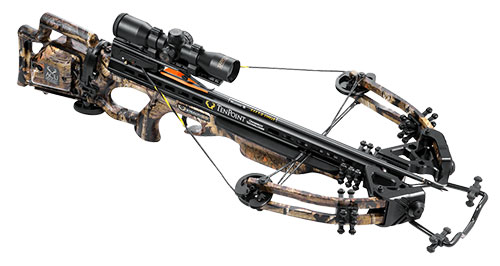
Bolt Not Seated Tight Against the String
Probably the number one cause of broken crossbow strings is the bolt not being seated tight against the string. If the bolt isn’t seated completely, the string can fire over or under the bolt, resulting in a dry fire effect. This can happen even if the bow is loaded properly at first. Example: Load the crossbow, set the bow down on the foot stirrup to do something, in some cases this is enough of a jolt to allow the bolt to slide forward just enough to not be seated the whole way, but far enough to disengage the anti-dryfire mechanism. Next thing you know, when you pull the trigger the string breaks and you're left with no idea why. Another issue along the same lines is a nock not being indexed properly. For example: if shooting a half moon nock, the cock vane of the bolt has to be perpendicular to the valley of the moon. Many times the impending crossbow string break will have some indicators:
- The bow will be louder than normal.
- The bolt will fly funny or not go anywhere.
- The fletching may be torn or damaged.
- The string will likely break at one or both of the end loops.
Damaged Bolt or Nock
Probably a close second of the reasons crossbow strings break is having a damaged bolt or nock. Even the slightest crack or imperfection in the nock or bolt can cause the string to break when fired. We've seen several strings cut right down the middle because of this. If the bolt does not cut the string down the middle, it will blow one or both of the endloops out, the same effect as with not having the bolt seated all the way. What it does is basically cause a dry fire like scenario where the energy does not get transferred to the bolt. Kind of like throwing a baseball as had as you can and it doesn't hurt your arm, but make the same throw with a ping pong ball, it throws your arm out and hurts. The big difference being you're dealing with a lot more energy and it has to go somewhere, if not into the bolt. So.. The limbs, cams, axles, strings and cables take all the shock.
Incorrect Nocks
The use of incorrect nocks is another issue. Every brand/model of crossbow has a specified nock or nock style to be used. There are several styles, so it can be confusing. It’s always best to either check your owner’s manual or with the manufacturer to be certain the correct nocks are in your bolts. This is just another way to avoid an unnecessary crossbow string break.
Improper Discharge
Something we don’t see a ton of but do get a couple of horror stories about each season is improper discharge. The best thing to do if your crossbow does not de-cock, is to shoot one of your normal field-tipped bolts into a discharge target. I’m not a big fan of discharge bolts, some are better than others, but there's definitely a correlation between discharge bolts and broken strings. What not to do is simply hold the crossbow at your side and fire straight down into the ground. If the bolt hits the ground before it clears the string, there will be issues. Same with using a discharge target, make sure you're at least far enough away for the bolt to clear the crossbow before it impacts the target.
Proper String and Cable Installation
Some crossbows need more attention to detail paid when installing new string and cable sets. Particularly on crossbows they run a double split "Y" buss cable system. Something I see a lot of is new buss cables installed on a bow without adding the extra twists to the bottom yokes for the purpose of minimizing cam lean. This needs to be done on every crossbow that takes buss cables, it's also different on every bow how many twists need added. All of this is in addition to timing the cams after the cams are straightened out. If it is not done properly the string will have a lot of excess down pressure against the rail, which will cause pre-mature wear on the center serving. The end servings are affected by this cam lean also, if the cams aren't parallel to the string the string will wear heavily against the top side of the string groove. I've seen customer photos that impressed me that the string even stayed on the bow as bad as the cams were pointing down.
Proper Care and Maintenance
It’s important that proper care and maintenance are executed to avoid a crossbow string break. Crossbows are tougher on strings compared to vertical bows; it’s just the nature of the beast. They shoot less grains of arrow weight per pound of draw weight than any compound bow setup, which is also why they are louder than a vertical compound bow. As a result, they require a little more TLC. Prevent a broken crossbow string with proper maintenance:
- They need to be waxed more frequently, especially if your bow has un-served cables that cross through the rail.
- A good rail lube is a must on most crossbows, although a lot of newer crossbows do not require it so be sure to check your owners manual.
- Keep an eye on all the serving, both in the center and at the ends of your string and cable set. Look for any serving separation where you'll start to see the strands of the string through the protective serving wrap.
How to Fix a Crossbow String
Other than replacing a separated center serving or occasional end serving there's really no fixing anything else on a crossbow string. It doesn't matter if the string has worn out over time or you all of a sudden have a broken bow string, the solution is the same: replace your crossbow string. When it’s time to replace the string, 9 times out of 10 you want to replace the cables along with it. They stretch just as much as the string and control your cams positioning and timing. We have another blog dedicated to this topic you can read here, there are a few exceptions. The importance of replacing your cables at the same time you replace your bowstring
Hopefully this article was able to answer any questions you've had on why a string broke and possibly assist in stopping an accident from happening in the future.
About the Author

60X Custom Strings National Sales Manager, Todd Lambright, is an accomplished archer. At the age of 20 he won his first National in open class and won the PA State Championship in Unlimited Class 5 years in a row from 2012-2016. He has shot amateur and pro. His archery knowledge doesn’t stop at the archery range. He began working at a local archery shop at 18 where he did everything from selling bows to rebuilding old bows. Todd uses his archery knowledge to assist dealers and retail customers at 60X.